
When it comes to home damage, few issues are as sneaky and destructive as mold growing behind drywall. You might not see it, but it could be silently eating away at your walls, releasing spores into your air, and affecting your family’s health without a single visible clue. What starts as a small patch of moisture can quickly become a large-scale infestation that compromises both your home’s structure and your indoor air quality.
At Elements Disaster Recovery, we’ve seen how fast mold spreads when hidden behind drywall — especially after storms, leaks, or plumbing failures. Understanding the signs of mold behind drywall early can save you from expensive repairs and health concerns down the road.
Why Mold Grows Behind Drywall
Mold thrives in dark, damp, and poorly ventilated spaces — and drywall provides the perfect environment. Because drywall is porous, it easily absorbs moisture from leaks, condensation, or flooding. Once the paper backing becomes damp, microscopic mold spores latch on and begin to spread.
Common causes of hidden mold include:
- Leaking pipes or roof leaks
- Flood damage or stormwater intrusion
- Condensation from poor ventilation in bathrooms or basements
- Cracked seals around windows or foundations
Once moisture becomes trapped behind the wall, it’s nearly impossible to dry out without removing the drywall entirely. Within just 24–48 hours, mold can begin to colonize, releasing spores that travel through the air and settle elsewhere in your home.
1. Musty Odor That Won’t Go Away
The very first sign many homeowners notice is a persistent musty smell. It’s earthy, damp, and lingers even after cleaning or using air fresheners. This smell comes from microbial volatile organic compounds (MVOCs) — gases released by active mold growth.
If you notice this odor near certain walls or corners, especially after a leak or humid weather, there’s a strong chance mold is growing out of sight.
2. Discoloration or Stains on the Walls
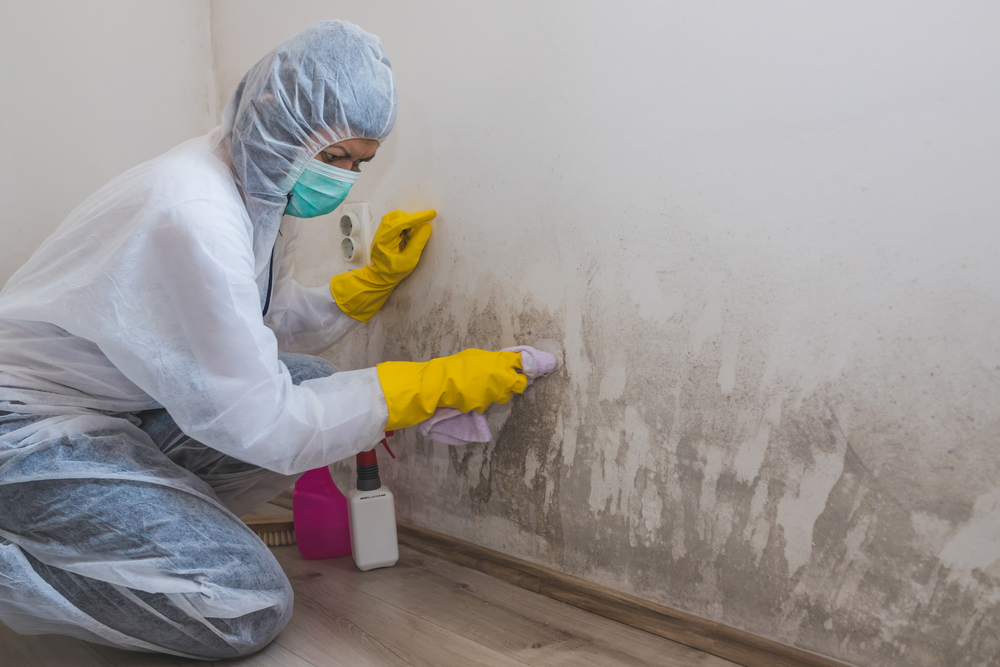
Mold doesn’t always show up as large black spots. In fact, it often begins as subtle yellow, brown, or greenish stains that slowly darken over time. These stains may appear even when the drywall surface feels dry to the touch because the mold colony is spreading underneath.
Pay close attention to any shadowy or blotchy patterns near baseboards, corners, or ceilings. If you’ve recently had water damage repaired, those same areas are especially vulnerable to recurring mold growth.
3. Bubbling, Peeling, or Warping Paint
If your paint starts to bubble, peel, or warp for no apparent reason, hidden moisture is the culprit — and with it, likely mold behind drywall. When water gets trapped behind paint, it creates air pockets that cause the surface to deform. As the drywall absorbs more moisture, mold spores feed on the paper and glue layers beneath.
This visual cue is your wall’s way of saying, “Something’s growing behind me.” Don’t just repaint over the problem — it’ll only hide the warning signs temporarily.
4. Soft, Sagging, or Warped Drywall
Healthy drywall is firm and smooth. But when mold eats away at it, it becomes soft to the touch, bowed, or even crumbly. This happens because the organic material in drywall — cellulose — acts as a food source for mold. Over time, this weakens the wall’s structure, and entire sections may need replacement.
If pressing lightly on your wall leaves a dent or feels spongy, it’s time to call a mold remediation specialist before the problem spreads further.
5. Allergy or Respiratory Symptoms Indoors
Sometimes the first sign of mold isn’t on your wall — it’s in your body. Mold spores circulating in your air can trigger symptoms like sneezing, coughing, watery eyes, headaches, and skin irritation. People with asthma or weakened immune systems may notice worsening symptoms inside the home.
If your allergies seem to flare up only when you’re indoors, or certain rooms make you feel worse, hidden mold could be the unseen cause.
6. High Humidity or Condensation
Humidity over 60% creates a perfect breeding ground for mold. Bathrooms, basements, laundry areas, and kitchens are particularly at risk. Condensation on walls or windows means excess moisture is present — even if you can’t see visible mold yet.
Over time, this trapped humidity seeps into drywall layers, giving mold the moisture it needs to thrive. Installing a dehumidifier and ensuring proper ventilation can help prevent this environment from forming.
7. Past Water Damage or Flooding
If your home has ever experienced leaks, burst pipes, or flooding, even years ago, there’s a good chance mold could still be lingering behind your walls. Mold doesn’t die when it dries out — it simply goes dormant, waiting for moisture to return.
That’s why professional mold inspections after any water incident are so critical. Even a small amount of hidden moisture can reactivate dormant spores, causing new growth without warning.
The Dangers of Ignoring Hidden Mold
Ignoring mold behind drywall can lead to far more than unpleasant smells or wall damage. The spores can circulate through your HVAC system, spreading throughout your entire home. Over time, exposure can lead to:
- Respiratory irritation and chronic coughing
- Asthma flare-ups
- Headaches, fatigue, or dizziness
- Weakened immune response
Beyond health issues, mold slowly eats away at wood framing, insulation, and even flooring. What could have been solved with a simple cleanup may eventually require costly wall replacements and reconstruction.
How to Confirm Mold Behind Walls
While some signs are visible, others require specialized equipment to confirm. Professionals at Elements Disaster Recovery use tools such as:
- Moisture meters to detect hidden dampness
- Infrared cameras to spot temperature variations behind walls
- Air quality testing to measure spore concentration
It’s important to avoid cutting into drywall yourself — doing so can release millions of spores into the air, worsening contamination. Let certified technicians perform a safe and controlled assessment.
What to Do If You Suspect Mold Behind Drywall
If you notice any of these warning signs, act quickly:
- Stop the source of moisture. Fix leaks or shut off water lines.
- Avoid disturbing the area. Scraping or touching can spread spores.
- Call a certified mold remediation company like Elements Disaster Recovery.
We provide 24/7 emergency response and use EPA-approved cleaning methods to contain, remove, and prevent mold safely and effectively.
How Elements Disaster Recovery Removes Mold Safely
Our proven process ensures every trace of mold — and the moisture that caused it — is eliminated:
- Inspection & Containment – We isolate affected areas to prevent cross-contamination.
- Air Filtration – HEPA filters remove spores and purify indoor air.
- Mold Removal – Contaminated drywall is safely removed and disposed of.
- Sanitization & Drying – We deep-clean all surfaces and dry the structure thoroughly.
- Prevention & Verification – Moisture sources are corrected, and final testing confirms your space is mold-free.
With certified specialists and advanced technology, Elements Disaster Recovery ensures that your home not only looks clean but is truly safe to live in again.
Preventing Mold Growth in the Future
Once mold has been removed, prevention is key. You can protect your home by:
- Keeping humidity between 30–50%
- Using exhaust fans in bathrooms and kitchens
- Fixing leaks promptly
- Cleaning and inspecting after heavy storms
- Scheduling regular mold inspections
We also recommend professional post-remediation verification to ensure the problem is completely resolved and won’t return.
Conclusion: Don’t Ignore the Hidden Signs
Hidden mold is more than just a cosmetic issue — it’s a threat to your home’s structure and your family’s well-being. The good news is, with early detection and professional help, you can stop mold before it spreads.
If you suspect mold behind drywall, don’t wait. Contact Elements Disaster Recovery for a professional inspection, safe removal, and long-term prevention. Our experts are ready to restore your home and peace of mind — quickly, safely, and thoroughly.